


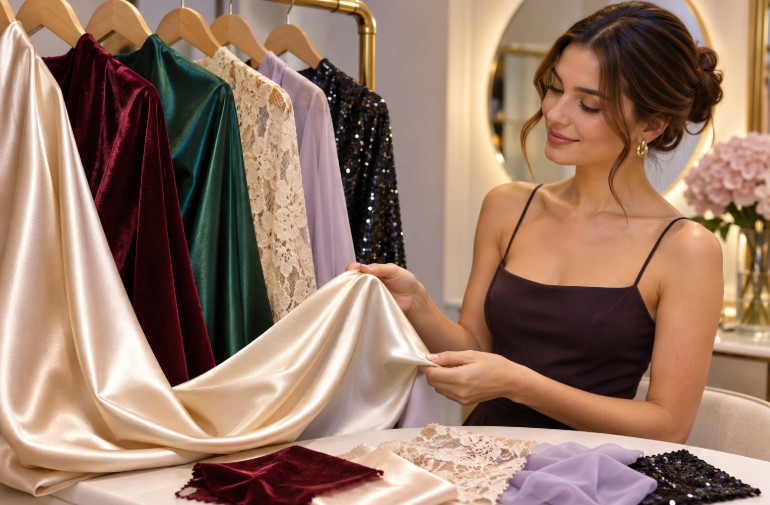
Choosing an evening outfit involves more than finding a dress in your favourite colour or selecting a flattering design. The fabric plays an important role in how a dress looks, feels, moves, and fits throughout an event.
Some dress fabrics create a smooth, polished appearance, while others offer structure, texture, or a softer finish. Understanding these differences can help you choose an outfit that matches the occasion without compromising comfort.
Here are six important things to consider about dress fabrics before planning your next evening outfit.
1. Fabric Texture Can Change the Entire Look of a Dress
The texture of a dress affects how formal or relaxed it appears. Two dresses with identical cuts can create completely different impressions depending on their materials.
Smooth fabrics often create a polished finish, while textured materials can add visual interest without requiring additional accessories.
Understanding Smooth and Textured Fabrics
Satin is commonly associated with evening clothing because of its smooth surface and subtle shine. A satin mini dress can work well for cocktail parties, birthday celebrations, and evening dinners where a slightly dressier appearance is appropriate.
Lace, velvet, and crepe offer different effects. Lace adds decorative detail, velvet creates a soft surface with depth, and crepe usually provides a more understated finish.
Consider the event’s dress code before choosing between these textures.
2. Fabric Weight Affects Comfort and Movement
Fabric weight influences how a dress hangs on the body and responds when you walk or sit. Lightweight materials often move more freely, while heavier fabrics may hold their shape better.
However, fabric weight alone does not determine comfort. The garment’s lining, construction, and fit also make a difference.
Choosing Between Lightweight and Heavier Materials
Chiffon can suit flowing dresses because it is lightweight and creates soft movement. Structured fabrics, such as certain types of taffeta, are more appropriate when the design requires defined shapes.
Before purchasing an evening dress, consider how long you will wear it. An outfit that feels comfortable while standing should also allow you to sit, walk, and move naturally.
3. Stretch Makes a Difference in Fitted Evening Dresses
A fitted dress may look attractive, but fabric flexibility determines how comfortably it follows your movements. Materials with limited stretch require more careful sizing, particularly around the waist, hips, and shoulders.
Stretch fabrics can offer additional flexibility, although they should still fit correctly.
Check the Fabric Composition
Look at the clothing label or product description before choosing a fitted design. A small percentage of elastane may provide stretch, depending on the fabric construction.
Avoid assuming that every body-hugging dress stretches. Check the size measurements and consider whether the design allows comfortable movement.
4. Sleeve Design Should Work With the Fabric
Sleeves affect both the appearance and practicality of evening clothing. Their comfort depends partly on the fabric’s thickness, breathability, and flexibility.
For example, fitted sleeves made from rigid material may restrict arm movement, while softer materials can feel less restrictive.
Matching Sleeves With the Occasion
A long sleeve mini dress can be suitable for evening dinners, indoor celebrations, or events during cooler weather.
When choosing one, consider whether the sleeves are lined, fitted, or loose. Lightweight sleeves may provide coverage without much warmth, whereas thicker materials can feel uncomfortable in heated venues.
5. Some Fabrics Require More Care Than Others
Evening dresses often contain materials that require specific cleaning and storage methods. Ignoring care instructions can affect their appearance after only a few wears.
Satin, lace, velvet, and embellished fabrics may need different treatment depending on their fibre content and construction.
Check Cleaning Instructions Before Buying
Always read the garment’s care label rather than assuming a particular fabric can be machine-washed.
Some dresses require gentle washing, while others recommend professional cleaning. Delicate fabrics may also need careful storage to prevent snagging, crushing, or unwanted creases.
Choosing a dress you can maintain properly makes it more practical for future occasions.
6. Lighting Can Affect How Dress Fabrics Look
Evening lighting can change how fabric colours, textures, and finishes appear. A dress that looks understated in daylight may reflect more light under restaurant lamps or event lighting.
Shiny materials highlight certain areas through reflected light, while matte fabrics generally create a softer visual effect.
Compare Fabric Finishes Before Making a Decision
When shopping online, examine product photographs showing the dress from different angles. Close-up images can help you understand the material’s texture and finish.
If possible, check how the dress looks under both natural and artificial lighting. This is particularly useful when choosing satin, velvet, or metallic fabrics.
Conclusion
Understanding dress fabrics makes planning an evening outfit easier and more practical. Texture, weight, stretch, sleeve construction, maintenance, and lighting all influence how a dress looks and feels.
Before making a final choice, consider the event, expected temperature, and amount of movement involved. The right fabric should complement the dress design while keeping you comfortable throughout the evening.